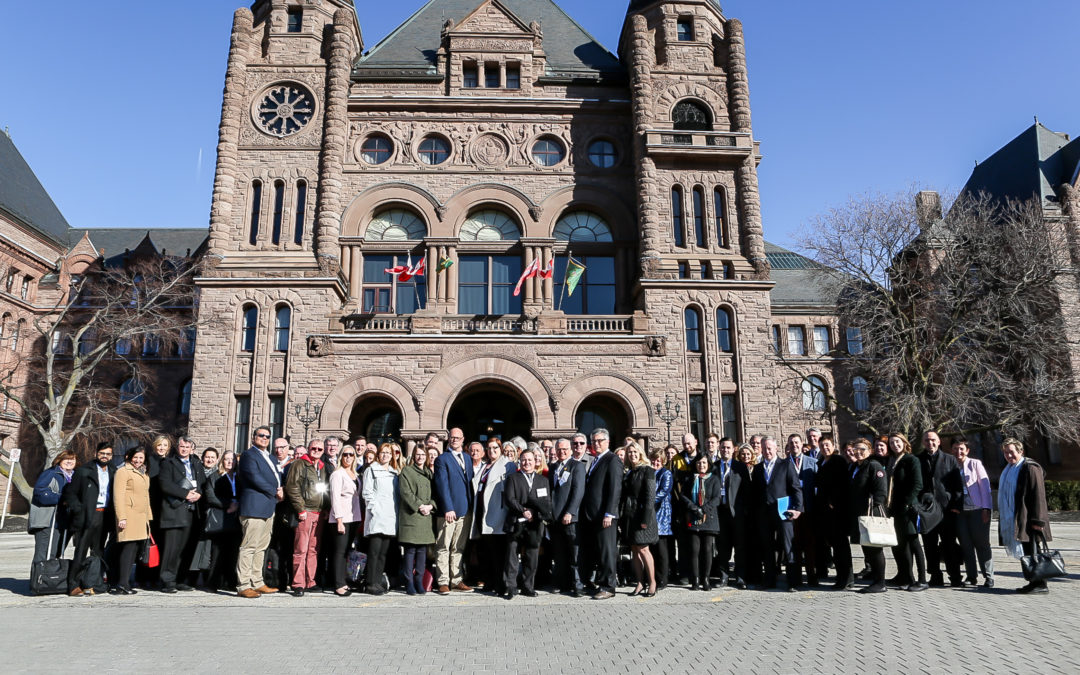
Small Business Week is an annual celebration of Canadian entrepreneurship. Events held during the week bring entrepreneurs together for workshops, networking, and tradeshows across the country.
Small Business Week is about celebrating the amazing things being done in our own neighbourhood. We are hosting a variety of events available to members and non-members. You do not need to be a small business owner or employee to attend!
As a tireless advocate for local businesses, the Burlington Chamber of Commerce invites you to join them in celebrating small businesses and the incredible contributions they make to our community!
Why celebrate Small Business Week?
According to the Government of Canada, small businesses account for 97.7% of all businesses.
That’s a lot of businesses to celebrate! Help us recognize the people behind our businesses in Burlington and the hard work they put in all year round.
Vote Prosperity reflects the priorities and concerns of job creators in communities across Canada. Developed in partnership with Canada’s provincial and territorial chambers of commerce, Vote Prosperity lays out our seven priorities, along with a series of specific measures to attract investment to Canada, and help businesses create jobs, grow and strengthen our communities.
Within the seven priority areas there are a total of 18 recommendations on how to achieve prosperity and bolster Canada’s long-term economic future and competitiveness.
Seven Priorities and Recommendations
1. Taxation
A tax system that is fair, efficient and modern.
Appointing a royal commission to conduct a comprehensive review of the Canadian tax system guided by the principles of tax competitiveness, simplicity and fairness.
Adjusting the tax mix to better promote business investment, including offshore investment and economic growth.
Presenting a concrete plan, with timelines, to return the federal books to balance.
2. Regulation
A regulatory system that works for everyone…including business.
Giving regulators economic growth and competitiveness mandates.
Implementing a 2-for-1 rule to require the elimination of two regulations for every new one introduced over the next five years.
Creating a Minister of Regulatory Efficiency responsible for regulatory oversight at the Treasury Board to lead an ambitious federal regulatory reform agenda.
Providing compensation to major project proponents and Indigenous communities that lose economic opportunities when projects cannot proceed because the Crown or its agencies fail to discharge their legal responsibilities.
Allowing First Nations to extricate themselves from aspects of the Indian Act via a Band Council resolution and the support of a clear majority of band member.
3. Trade
Access to new markets around the world and the elimination of trade barriers at home.
Completing negotiations with Mercosur and Pacific Alliance in the Latin American region.
Accelerating the process for additional countries to join the Comprehensive and Progressive Agreement for Trans-Pacific Partnership (CPTPP).
Launching negotiations with the Association of Southeast Asian Nations (ASEAN).
Tackling foreign industrial subsidies so Canadian companies can compete on a level playing field at home and abroad. Protecting and expanding trade opportunities with the United Kingdom after its departure from the European Union.
Enhancing labour mobility and increasing the scope of mutual recognition of professional qualifications at home and abroad.
Promoting trade facilitation measures to ease the movement of goods across the border.
Developing a Canadian position in support of cross-border data flows in bilateral and multilateral trade agreements.
Tackling non-tariff barriers, particularly in the agriculture sector.
Developing concrete plans with clear timelines for creating the necessary infrastructure to get Canadian energy products to global markets.
Working with the provincial and territorial governments on the mutual recognition of regulations, rules and policies to allow for the free movement of labour, goods and services in Canada
Conducting a full review of the Canadian Free Trade Agreement (CFTA) to ensure it:
Covers all sectors of the economy and includes all government entities, including ministries, Crown corporations and regional and local governments
Institutes a dispute resolution mechanism that includes binding and enforceable powers.
Includes a specific focus on the removal of barriers to interprovincial trade in wine, beer and spirits.
Includes the elimination of non-tariff regulatory trade barriers through mutual recognition.
4.Small Business
Resources to help small and medium companies grow and succeed.
Providing sector-by-sector analyses of free trade agreements (rather than agreement-by-agreement) and communicating them widely.
Providing high-potential SMEs with access to experts to help them navigate the relevant markets.
Ensuring federal programs and interactions with business align with and respect small business realities.
Conducting an independent service delivery audit of the Canada Revenue Agency, targeted at identifying and eliminating the compliance, audit and communication problems small businesses face in dealing with the agency.
5. Connected Canada
Innovation and infrastructure to make Canada the most connected country in the world.
Embracing a more nimble, flexible and evidence-based approach to regulating new technologies in the digital age.
Recognizing the need to promote and strengthen Canada’s ability to capitalize on intangibles, like intellectual property.
Working with businesses to create an environment that is attractive to investors and innovators both from abroad and at home.
Improving access to high-speed networks in underserved communities.
Prioritizing the auction of the 3,500-megahertz spectrum so Canadians can take advantage of 5G networks.
Accelerating the pace of mmWave spectrum allocation so businesses can use the power of the internet of things (IoT) for logistics and other industrial purposes.
Enhancing the digitalization of government, including more user-focused services that reduce administrative burdens on business.
Closing the gap between infrastructure demand and investment in Canada by maintaining current levels of federal infrastructure funding and making economic growth and productivity, not politics, the criteria for project selection.
Allocating a greater share of funding in federal infrastructure plans towards trade-enabling infrastructure projects throughout Canada.
6. Skills
A workforce with the skills, education and training to prosper.
Working with business to ensure government re-training programs meet the demand for skills required for the economies of today and tomorrow.
Working with business and other levels of government to ensure primary and secondary education includes the skills necessary for our evolving economy, including the soft and hard skills required to thrive in a world of increased automation and globalization.
Broadening the definition of WIL to include a wide range of experiences across fields, regions and participants.
Providing more accessible funding supports, such as refundable tax credits, employment insurance premium reductions and more flexible grant programs, to SMEs and organizations that have not previously offered work placements
Replicating the Atlantic Immigration Pilot Project outside of major urban centres across the country.
Ensuring the Indigenous workforce has the skills required to meet local labour shortages.
7. Pharmacare
A healthier pharmacare system for healthier Canadians.
Building on the strengths of the existing system without reducing or replacing the coverage already enjoyed by most Canadians.
Consulting with private sector stakeholders (including benefits providers, pharmaceutical companies and health care practitioners) when designing and implementing a national program to prevent unintended consequences, such as loss of access to medicines.
Ensuring the costs of any new program are not passed on to businesses/employers.
Ensuring any new program addresses coverage for rare diseases and other high-cost medications.
Fostering an investment and regulatory environment that encourages clinical trials in Canada by applying our competitive advantages in artificial intelligence and big data to health innovation.
Ensuring our businesses have continued access to health data to improve health outcomes as well as government funding that goes beyond early science for both medications and devices.
Burlington Mayor Marianne Meed Ward announced a new initiative being launched from the Mayor’s Office in partnership with Councillor Kelvin Galbraith: the Red Tape Red Carpet Task Force.
The initiative’s goal: identify and eliminate barriers to growth and new business attraction in Burlington so that new and existing businesses can locate here, expand and thrive. Read the platform here.
The Burlington Chamber of Commerce welcomes Lindsay Stevenson as their new Strategic Communications Coordinator. With a background in Global Studies, and post-graduate certificate in International Development, Lindsay is pleased to continue raise awareness for community development opportunities through the Chamber while bringing life to business. She recently served as a Marketing and Communications Intern for the Terry Fox Foundation-Burlington, where she used her educational background and passion for community development to raise awareness for cancer research. She is pleased to continue to be involved within the community, connecting leaders and raising awareness for local initiatives in her new role.
On September 12, the Ontario Chamber of Commerce (OCC) released a new report, The Great Mosaic: Reviving Ontario’s Regional Economies. The report outlines how government of all levels can work with industry to unleash the potential of Ontario’s regional economies and reinforce the competitiveness of the province as a whole.
“We are
only as strong as our weakest link and our ability to prosper depends on the
strength of our different regions. Economic and population growth rates in the
Greater Golden Horseshoe and Ottawa have far surpassed those in other areas of the
province,” said Rocco Rossi, President and CEO of the Ontario Chamber of
Commerce. “Our communities – and the province as a whole – risk falling behind
if we do not leverage the rich and diverse competitive advantages of our local
economies.”
The Great
Mosaic: Reviving Ontario’s Regional Economies examines the opportunities and
challenges faced by different communities across the province and offers a
framework for thinking about the present and future of Ontario’s regional
economies.
“We urge
policymakers to take a modern and comprehensive approach to economic
development by leveraging the existing competitiveness advantages of Ontario’s
regions, and implement deliberate strategies to support long-term growth in
communities across the province,” added Rossi.
The OCC’s
report makes 17 recommendations to strengthen the well-being of Ontario’s
regions. Key takeaways include:
The most cost-effective way to drive economic
development is to cultivate talent, trade, and infrastructure. Governments
should make it a priority to upgrade transportation and energy networks,
modernize their regulations and business supports, offer dynamic education and
training opportunities, and encourage labour mobility.
Building regional capacity for innovation is
fundamental to productivity and growth. This means improving commercialization
and technology adoption, strengthening regional innovation centres, expanding
broadband internet access, and facilitating cluster development.
Modern governance of economic development should
empower a wide range of stakeholders including
businesses, post-secondary institutions, and not-for-profit organizations outside government. Regional
collaboration, economic reconciliation with Indigenous peoples, and the use of
data are all critical to mobilizing local assets.
“In the face of technological transformation and globalization, there is no question that Ontario has what it takes to succeed. We are optimistic that the province can successfully navigate the modern economy if we work together to unlock the economic potential of our communities,” says Burlington Chamber President & CEO Carla Y. Nell.
Each year the Ontario Economic Report (OER) presents the collective voice of the Ontario Chamber of Commerce’s (OCC) membership through the Business Confidence Survey, the Business Prosperity Index and the Economic Outlook. The report provides a snapshot of the past year and a look at the year ahead.
This year, the OER focuses on building economic opportunity for Ontario and is aimed at shaping and informing future public policy. In 2019, the OCC will be engaging its members, government and other leaders to explore the issues outlined in the OER and develop the necessary solutions to drive forward a stronger Ontario.
The Burlington Chamber Of Commerce is pleased to announce that Carla Y. Nell has been appointed as the organization‘s new President & CEO effective July 22, 2019. Ms. Nell is replacing Keith Hoey who announced his retirement in January.
“Interest in the CEO position was very high; we received almost 100 applications for the role,” said Tom Flannery, Chair of the Chamber’s Board of Directors. “We were fortunate to have several exceptional candidates to select from, but in the end, Carla was uniquely qualified and the unanimous choice of our search committee. I am pleased to welcome her to the Burlington Chamber and am confident she will play a key role in successfully delivering value to our members.”
Ms. Nell brings more than 25 years of senior leadership experience in both the private and public sectors to her new role at the Burlington Chamber. Her wealth of experience, skills and insights will be of significant value to the Chamber community.
Recently, she served as the Vice-President, Municipal and Stakeholder Relations at the Municipal Property Assessment Corporation (MPAC). Throughout her career she has also gained extensive experience as principal of a professional services consulting firm, has served as a trusted strategic advisor on complex issues to a diverse range of clients, stakeholders and organizations, and was previously a part-time professor at Seneca College in the Faculty of Business. She holds numerous degrees and professional designations and is a sought-after contributor and speaker by associations serving both the private and public sectors with provincial, national and international profile. Carla is a highly regarded thought leader whose commitment to customers and partnerships is a signature of her leadership.
“I am delighted to be taking on this important leadership role with the Burlington Chamber of Commerce,” said Ms. Nell. “I look forward to working with the Board of Directors, the membership and other community partners in this capacity to continue the Chamber’s strong legacy of bringing life to business in Burlington.”
The Burlington Chamber of Commerce has announced that Joel Ippolito, CEO of Ippolito Group, will receive Burlington’s 2019 Distinguished Entrepreneur Award.
Joel Ippolito was chosen as the award recipient to recognize his leadership role in building a successful, high-profile company that positively represents Burlington both locally and regionally. He reflects entrepreneurship through his company and through his philanthropic endeavours giving back to the community through the Ippolito Group. Mr. Ippolito took over a leadership role in the family business more than two decades ago and has led the organization through remarkable international growth.
Ippolito was notified of the award earlier this month. “I was completely shocked when they told me,” said Ippolito. “I’m very honored to be recognized for this award and I owe this honour to the hard work and dedication of everyone in our organization. I’m proud of all we have done in Burlington and for the tremendous support we have received from the community.”
This is the sixth time the Chamber of Commerce has accorded the honour to local entrepreneurs and the fourteenth time a great Burlington businessperson has been recognized. In previous years the award was called the Entrepreneur of the Year award. The change to Distinguished Entrepreneur is more reflective of the lifetime achievements of the award recipient, according to Keith Hoey, President & CEO of the Burlington Chamber of Commerce. “We’re extremely pleased to be honouring Mr. Ippolito with this very prestigious award and we’re looking forward to presenting him with the award at a special dinner this fall,” said Hoey. “The Distinguished Entrepreneur Dinner has a great tradition of recognizing and honouring great Burlington business leaders and it’s important that we acknowledge and thank these people for their contributions to our city.”
Not too long ago I wrote a blog about what
a Chamber of Commerce is and what it is not. Some of the questions that I got
after the blog was published were about advocacy. What is advocacy? How does
the Chamber do advocacy work? What difference does advocacy work make? These
are all good questions.
One of the mandates of the Chamber is to
represent the views of our members – to lobby all levels of government on
behalf of our members. This is advocacy. If our members think that legislation
needs to change to help them run their businesses better, the Chamber will
carry that view to government. When we take that opinion to government,
we are representing the views of thousands of businesses. That’s what gives our
voice power.
Local Chambers of Commerce (like Burlington
and Hamilton) speak with the collective voice of their members and, therefore,
the collective voice of the business community. That voice is amplified when we
speak at the provincial and federal levels. For issues that are provincial in
nature we speak through the Ontario Chamber which represents 160 Chambers and
60,000 companies across the province. This means the Ontario Chamber has a very
powerful voice with the provincial government. The provincial government
listens. The same thing happens at the federal level with the Canadian Chamber
of Commerce (CCC) which speaks on behalf of 450 local chambers and 200,000
businesses across the country.
I recently attended the CCC convention in
Charlottetown. At this convention the Burlington Chamber presented its climate
change policy. The policy was debated and voted on by the 310 delegates at the
conference. It was adopted by the CCC and now the CCC will lobby for
implementation of this policy by the Canadian government. That’s how advocacy
works at Chambers of Commerce. Policies are written by Chamber members at the
local level and delivered to governments at the municipal, provincial and
federal levels. These policies change the way government works; governments
change legislation based on these Chamber policies.
Recent examples include; creation of a CRA
liaison officer (a Burlington Chamber policy), elimination of the capital tax,
reduction of corporate income tax, reduction of corporate minimum tax,
reduction of the doctor shortage (another Burlington Chamber policy) – the list
goes on and on.
So, local Chambers represent the views
(i.e. advocate) on behalf of their members. We work to change legislation to
create a more business-friendly environment. Advocacy work is complicated and
takes time, but it does make a difference.
I’ve been working at the Burlington Chamber of Commerce for about 15 years now and I’ve noticed a fairly common misperception about what a Chamber of Commerce actually is.
Often when I’m out at an event, someone will ask me what I do for a living. When I tell them, I work at the Chamber of Commerce, it’s not uncommon for them to respond with a remark about city hall; they think the Chamber is a department of the city and that the Chamber is paid for with city taxes. Nothing could be further from the truth. The Burlington Chamber of Commerce is NOT a department of city hall, nor does it get any funding from city hall. The Chamber is a fully independent, non-profit business association. All of the Chamber’s funds come from membership dues and other activities (like many of the events that we host). Simply stated, your tax dollars do not fund the Chamber of Commerce.
As a matter of fact, Chamber by-laws do not permit any elected officials to sit on our Board of Directors (Board members must step down if they decide to run for office). This eliminates any conflicts of interest that could arise when the Chamber Board discusses policies that will be delivered to various levels of government. While the Chamber is not a part of city hall, we do work with city hall on behalf of our members. Our job is to act as an advocate for our members and represent our members’ views and needs to government; that is the extent of our relationship with city hall (and all levels of government). The role of the Burlington Chamber is to make Burlington a better place to live and work.
The separation between the city and the Chamber of Commerce is clear. They are two distinct organizations, each with its own mandate. The Chamber of Commerce is a completely separate entity from the city and exists solely to support the needs of its members.